

 DEUTSCH
 ENGLISH
Beach volleyball camp as a break from your phone – digital detox
You usually only notice once it's already happened: two hours at the net, sun on your skin, sand between your toes – and your phone has been lying untouched in your bag since breakfast. With us, that's not a programme item we prescribe, but the completely natural side effect of a camp day where simply more is going on than on your screen.
- According to the Amadeus study "Travel Dreams 2026", 52% of travellers in Germany name recovering their nervous system as a reason to travel, and a third are specifically looking for a digital retreat.
- We have no phone bans – less screen time happens by itself thanks to training, the group and a full daily schedule.
- A typical camp day combines training, shared meals and free time on the beach instead of on a screen.
- The effect is especially noticeable at quieter locations like Durrës or Ravenna.
- After just three to four days, taking a break from their phone becomes second nature for most guests.
Why is "less screen time on holiday" becoming a travel topic right now?
According to the Amadeus study "Travel Dreams 2026", 52 percent of travellers surveyed in Germany are focusing on recovering their nervous system as a central reason to travel in 2026, and a third are specifically looking for places that allow a conscious digital retreat. Travel is explicitly seen as an investment in mental recovery, not just a change of scenery. That matches what we observe at our camps: if your whole day is filled, you eat together and fall into bed tired from playing in the evening, you simply have no headspace left for scrolling.
What does that look like in everyday camp life?
A training day with us starts with breakfast on your own or with the group, followed by training sessions in the morning, a longer break for swimming or resting and usually a second block in the late afternoon, when the sun isn't so hot anymore. There's time in between, but it's rarely spent on the phone – more likely at the next court, in a hammock or playing cards with the group. Nobody takes your phone away, it just becomes less and less interesting when real life is happening right next to you.
Is it some kind of digital detox programme with fixed rules?
No, deliberately not. We don't believe in phone bans or lockboxes for smartphones – that would create pressure rather than relaxation. Instead, we design the day so that screen time naturally fades into the background: more movement, more face-to-face conversations, more shared meals. If you want to post photos in the evening or call home, of course you can do that at any time.
Where can you feel this break especially well?
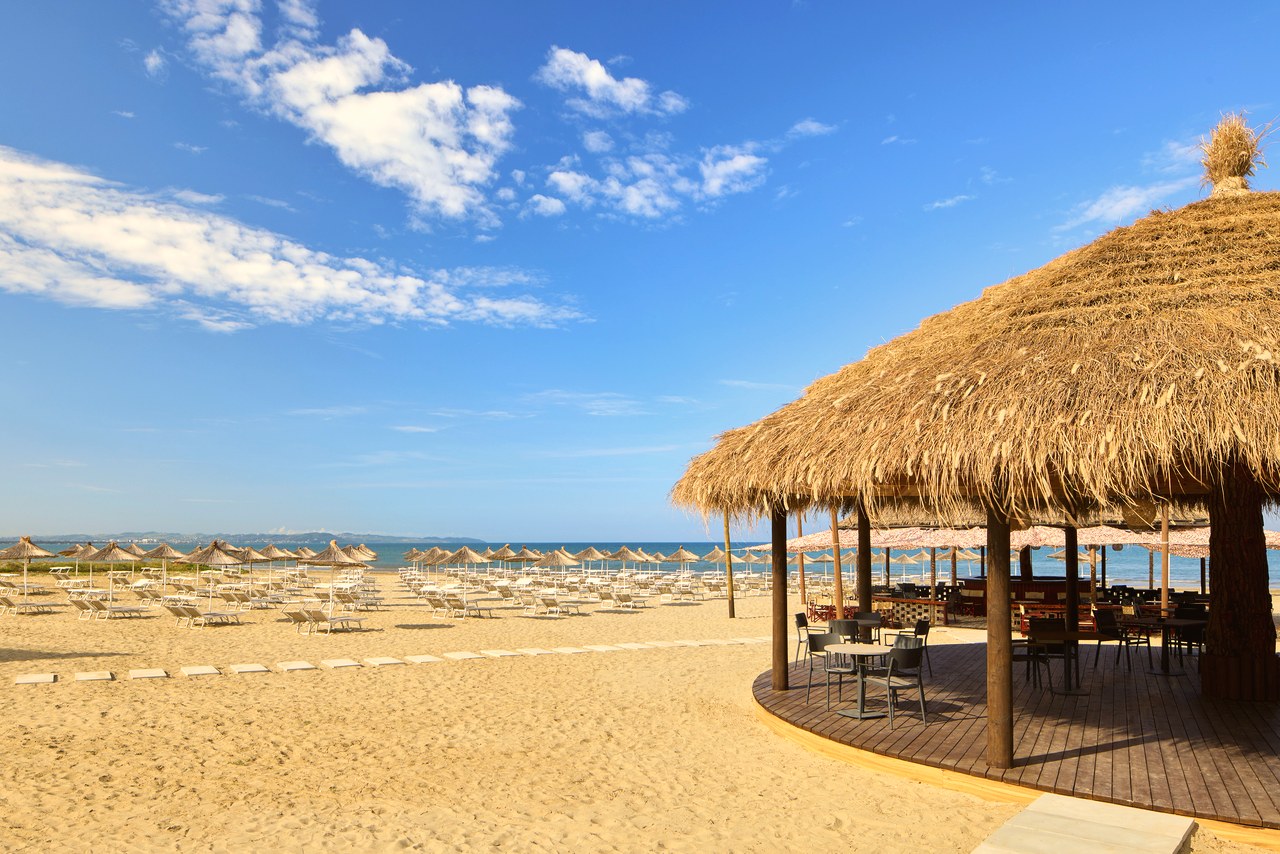
It becomes especially clear at quieter locations like our camp in Durrës on the Albanian Riviera, where the beach club is right on the beach and the day slows down almost by itself, or on the Italian Adriatic coast in Ravenna, where long stretches of beach and short distances between accommodation, training court and water naturally take the pressure off the day. Our Sunsation Beach camp in Gandía on Spain's Costa del Azahar, with its training courts right by the sea, also offers this combination of sport and slowing down.
Who benefits most from this side effect?
Anyone coming from a tightly scheduled working life where they're always reachable, and who fancies sport instead of a compulsory gym routine, benefits most here. You don't have to be an experienced tournament player – what matters more is being willing to spend a few days focusing on movement, sun and the group around you instead of a screen.
How long should you stay for the effect to kick in?
A week is usually enough for a noticeably different rhythm to set in. In the first day or two, many still reach for their phone out of habit whenever there's a quiet minute. From day three or four, once training, the group and the daily routine have become second nature, time without a screen becomes a natural part of the holiday for most of our guests rather than a conscious effort.
Frequently asked questions
Is there a phone ban or fixed digital detox rules at camp?
No, we don't rely on bans. The effect happens by itself through a full, active daily schedule with training, the group and community.
Is the camp also set up for a break in terms of Wi-Fi?
Our accommodation has normal internet – it's not about missing technology, but about a daily routine that reduces screen time all by itself.
Do I need to be very fit to keep up?
No. Our training groups are based on level, so both beginners and experienced players find their own pace.
Which location is best for a quiet, slowed-down week?
Our camp in Durrës on the Albanian Riviera and our location in Ravenna are considered especially relaxed and unhurried by our guests.
Where does the claim that digital detox is a travel trend in 2026 come from?
From the Amadeus study "Travel Dreams 2026", published in April 2026, which examined travel behaviour in Germany.
Conclusion
You don't need to look for a special digital detox holiday – when your day is well filled with training, sun and the group, your phone disappears into your bag almost by itself. Curious? You'll find all camps and dates on volleytours.com/en/camps-events.
come as a player, leave as a friend