

 DEUTSCH
 ENGLISH
Beach volleyball in extreme heat: how to play safely – and still have fun
When the thermometer climbs above 35 degrees and the sand is glowing under your feet, it doesn't mean your beach volleyball day is over. With the right time of day, enough to drink and a bit of sun protection, you can play even in extreme heat – you just need to know when your body reaches its limit. Here are the most important rules from more than a decade of camp experience, short and honest. (As of: August 2026)
Key facts at a glance
- From around 33 degrees air temperature, the risk of heat illness rises significantly.
- Dry sand can heat up to over 50 degrees within minutes in full sun.
- The most dangerous hours are between 11:00 and 16:00 – better take a break then.
- For activity lasting more than an hour you need roughly 0.5 to 1 litre of fluid per hour, more in the heat.
- Above a body temperature of 40 degrees, heatstroke is a risk – that's an emergency, call 112.
When does beach volleyball in the heat become dangerous?
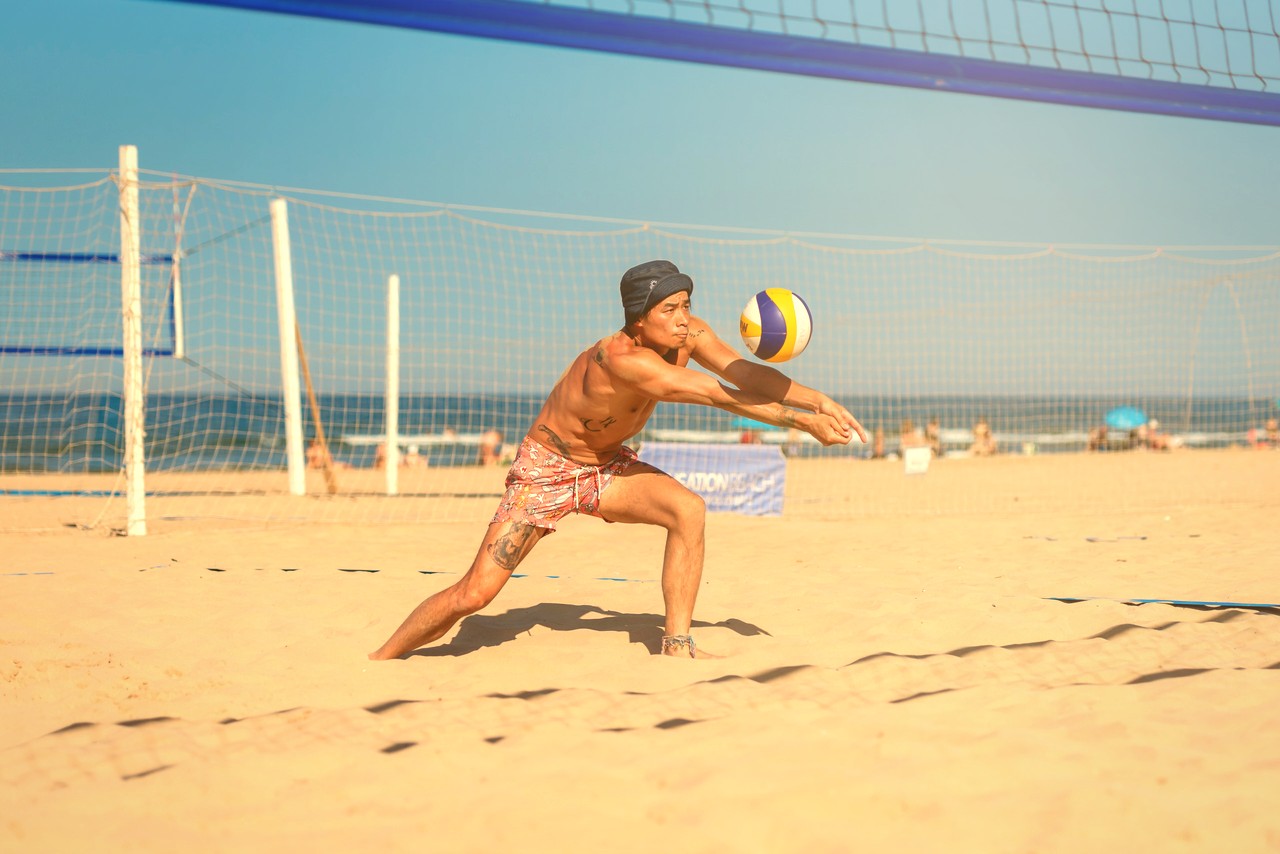
For most people it gets critical from around 33 degrees air temperature – from that point the risk of heat-related problems is significantly higher. In beach volleyball there's another factor many underestimate: the sand. Dry beach sand heats up to over 50 degrees within a few minutes in direct sunlight, in extreme cases even more. So your body isn't just battling the air temperature, but also the heat radiating up from below.
During intense play your muscles produce extra heat. Your body cools itself by sweating – but the hotter and more humid it is, the worse that works. That's exactly when the risk of overheating rises. So the rule is: don't just tough it out, think ahead.
When should you play in the heat – and when not?
The clear answer: play early in the morning or from late afternoon into the evening, and avoid the blazing midday sun. The hottest and most dangerous hours are between 11:00 and 16:00 – that's when the sun is highest, the UV index strongest and the sand hottest. The German Society for Sports Medicine and Prevention (DGSP) explicitly recommends moving exercise to cooler times of day on very hot days and reducing intensity and duration.
Early in the morning the sand is still cool, the air fresh and the sun less aggressive – the best time for a match. If you absolutely want to hit the net during the day, play shorter sets, take longer breaks in the shade and turn down the pace.
How much should you drink in the heat?
As a rule of thumb you lose around 0.5 to 1.5 litres of sweat per hour when exercising – in great heat more towards the upper end. The German Nutrition Society (DGE) advises drinking 100 to 200 millilitres every 15 to 20 minutes instead of waiting until you're thirsty. Over a full hour of activity that adds up to around 0.5 to 1 litre, and more on hot days.
Important: start the game well hydrated – around half a litre two to three hours beforehand. If you sweat a lot, add electrolytes (mineral water, a pinch of salt or a juice spritzer), because sweat also makes you lose sodium and magnesium. And don't drink ice-cold – it puts unnecessary strain on your stomach.
How do you recognise heat exhaustion and heatstroke?
The difference decides whether you can counteract it yourself or whether it's an emergency. Heat exhaustion announces itself with moist, pale skin, dizziness, nausea and weakness – body temperature usually stays below 40 degrees. Heatstroke, on the other hand, is life-threatening: body temperature rises above 40 degrees, the skin becomes hot and often dry, plus confusion and clouded consciousness.
| Sign | Heat exhaustion | Heatstroke |
|---|---|---|
| Body temperature | below 40 °C | above 40 °C |
| Skin | moist, pale | hot, often dry, flushed |
| Consciousness | clear, but weak/dizzy | confused, clouded |
| What to do | shade, lie down, drink, cool down | call 112 immediately, cool down (not ice-cold) |
If heatstroke is suspected, every minute counts: call the emergency number 112, move the person into the shade and cool them with damp cloths on the neck, armpits and groin – but not with ice-cold water. When in doubt, get medical advice too early rather than too late.
How do you protect yourself in the sun while playing?
Sun protection is a must in beach volleyball, because you're standing unprotected in the sun for hours and the light sand also reflects the UV light. Apply sunscreen with SPF 30 or higher at least 20 minutes before playing and reapply about every two hours – more often if you're sweating. Plus:
- A cap or visor against direct sun on your face
- Sunglasses with UV protection, because light sand is very dazzling
- A light, bright UV shirt for long sessions
- Take your breaks in the shade, not in the sun
- Wear flip-flops when crossing hot sand – above 50 degrees your feet can get burnt
A cool, wet towel around your neck between games works wonders – your body releases a lot of heat through the neck and head.
How do the Volleytours camps deal with heat?
From more than a decade of camps in Gandía, Ravenna and Durrës we know: the key is the daily rhythm. We deliberately schedule training sessions in the cooler morning and late afternoon and leave the blazing midday heat for siesta, shade and the sea. Water is always available, shady retreats are part of the setup, and our coaches adjust intensity and breaks when it gets really hot. That way even a 35-degree day stays a good beach day – we play when it's pleasant and cool off when the sun is at its strongest.
Frequently asked questions (FAQ)
Can you still play beach volleyball above 35 degrees?
Yes, but with adjustments: play early in the morning or in the evening, reduce intensity and duration, drink plenty and avoid the midday sun between 11:00 and 16:00.
Which time of day is best in the heat?
Early morning and from late afternoon into the evening. The sand and air are cooler then, the sun is lower and the UV index is lower.
How much should you drink when playing beach volleyball in the heat?
Roughly 0.5 to 1 litre per hour, more on hot days. Ideally 100 to 200 millilitres every 15 to 20 minutes, plus electrolytes if you sweat a lot.
What should you do in case of heatstroke?
Call the emergency number 112 immediately, move the person into the shade and cool them with damp cloths – not with ice-cold water. Heatstroke with a body temperature above 40 degrees is always an emergency.
How hot does the sand get in beach volleyball?
Dry sand can reach over 50 degrees within a few minutes in full sun – hot enough to burn bare feet.
Conclusion
Extreme heat isn't a reason to take down the net – it's a reason to play smarter. If you avoid the midday sun, drink enough, put on sunscreen and know the warning signs, you can enjoy beach volleyball even in high summer. Curious about sun, sand and good people? You'll find all camps and dates on volleytours.com/en/camps-events – come as a player, leave as a friend.